The fortified medieval city of Sighisoara is one of the best places to visit in Romania. The city has been recognised by UNESCO as a World Heritage Site. This small metropolis in the heart of Transylvania absorbs you completely. Between strolling through the streets, admiring the rainbow of colours of the houses, the Clock Tower or the Church on the Hill, you can spend a pleasant few days here.
This beautiful city with its cobbled streets, nine towers, bourgeois houses and ornate churches rivals the historic areas of important European cities such as Prague.
Whenever we talk about Transylvania, we associate the name of Count Dracula and it was precisely in Sighisoara that the Count was born, in a house in the historic centre just a few metres from the Clock Tower. Together with Brasov and Sibiu, it forms part of Romania's magic triangle.
What to see in Sighisoara
The Piata Cetatii, or main square, is one of the main meeting places in this Romanian city. Surrounded by wooded hills, 300 km from Bucharest, Sighisoara was colonised by the Saxons in the Middle Ages.
Despite being attacked several times, the citadel managed to maintain its fortifications and is still a unique place today, close to the Carpathian Mountains. These mountains once formed a natural land border between Europe and the eastern part of the continent controlled by the Ottoman army.
- Hotel in Sighisoara - Find the ideal accommodation in Sighisoara, with incredible deals and excellent facilities
- Take out travel insurance at IATI or Heymondo with a 5% discount
- Book the best tours, activities, transfers and entry to monuments in advance, without any unforeseen problems with GetYourGuide
Sighisoara Citadel
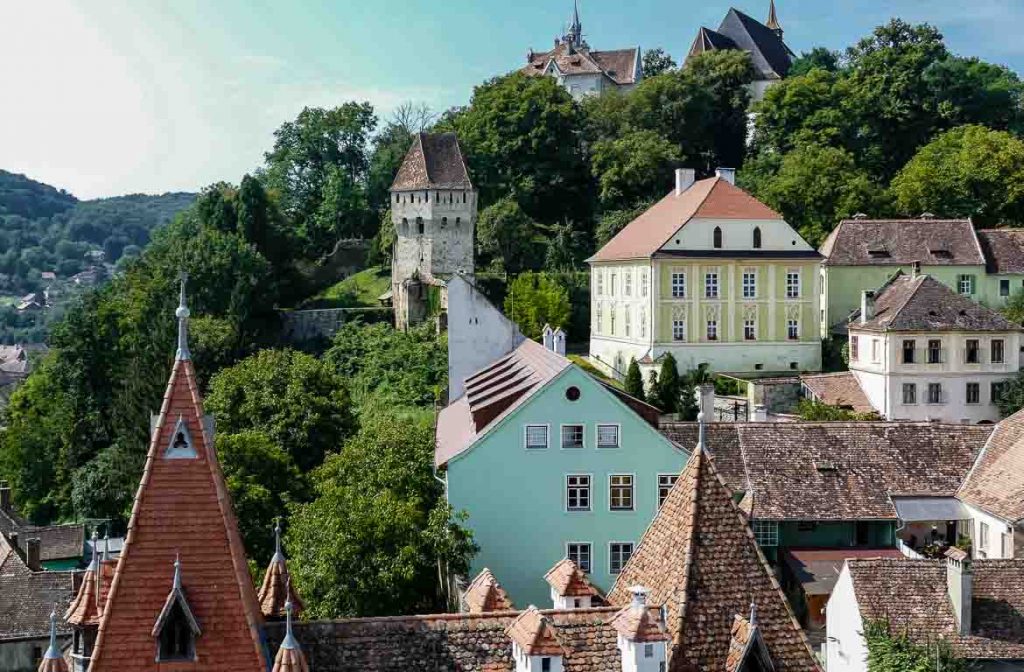
The Old Town is made up of alleys, squares, churches and stone towers. In late medieval times, Sighisoara was on the border of the Ottoman Empire and faced several sieges and attacks.
Several watchtowers were built and nine remain, including the Clock Tower and the Shoemakers' Tower. Many were named after emerging professions, such as blacksmiths, tailors or tinsmiths. Dating back to the 16th century, the Shoemakers' Tower was a key point of defence to the north, while to the south is the Tailors' Tower and to the east the Blacksmiths' Tower.
Each tower was built to a different standard. When you visit Sighisoara, you'll catch a glimpse of 9 of the 14 towers that have survived attacks and the passage of centuries.
Dracula's House
Sighisoara's main attractions lie within the confines of the old city walls and Dracula's House is one of the most popular places.
Vlad III, or simply Dracula, was a Romanian ruler known for the cruel methods he used to torture and execute his enemies - particularly execution by impalement. However, not everyone remembers him as a bloodthirsty madman. For many, Vlad III was a national hero who fought against the Ottoman attacks.
Feared for his cruelty, the Prince of Wallachia was the inspiration for Bram Stoker's Count Dracula and spent the first four years of his life in the building.
The building also houses a restaurant. However, it's probably best not to pass through this area at night. Or, if you do, take a bunch of garlic... to ward off the vampires.
Piața Cetatii (Citadel Square)

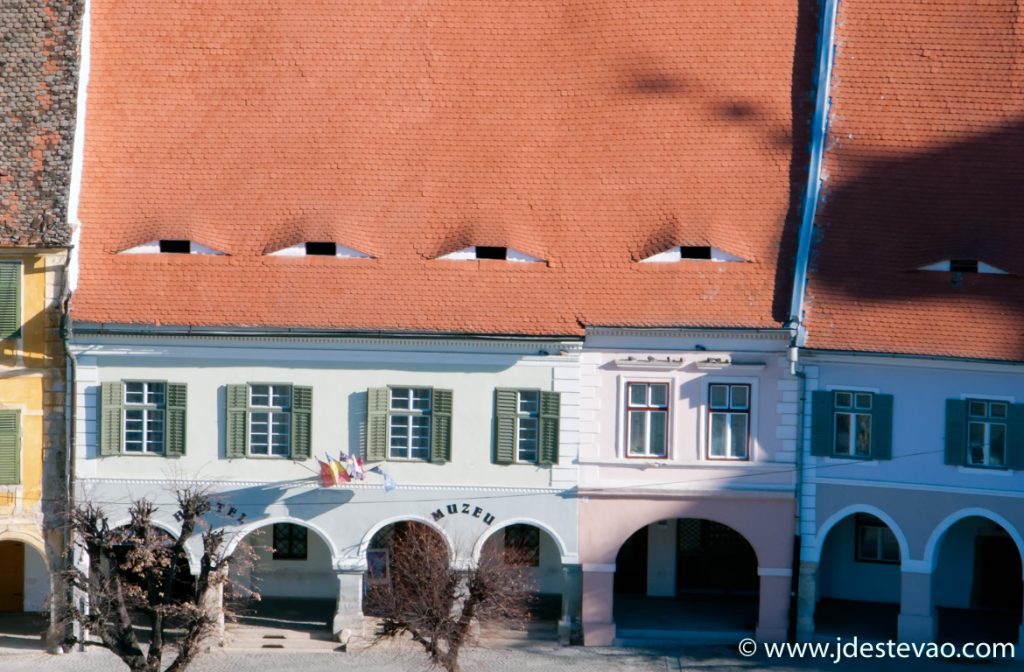
Near the Clock Tower, you'll find a beautiful square where all the main events took place in medieval Sighisoara. In this very place there were chaotic markets, public executions and witch trials.
Now, everything is more peaceful but just as colourful, as the facades of the houses are painted in a variety of vibrant colours. In the centre, two trees fill part of the empty space. It's a good place to relax and feel the pulse of the city.
Church on the Hill (Biserica din Deal)
You can't visit Sighisoara without taking a look at the Church on the Hill, a Gothic building with three naves and considered one of the three largest in Transylvania.
Originally a 13th-century basilica, it was restored in Gothic style during the 14th and 15th centuries and is the most important monument of religious architecture in Sighisoara. Inside, there are frescoes and Renaissance objects. Among the scenes depicted in the frescoes, you can see St George fighting a dragon.
Another place to see in Sighisoara is the Monastery Church. Once linked to a Dominican monastery, this church was first built in the 13th century. The predominant style of architecture is Gothic, while several of the objects (such as the pulpit and altar) - which originate from the 17th century - are in the Baroque style.
Lining the walls are dozens of oriental carpets, but the most valuable piece is a bronze fountain, cast in Sighisoara in the 15th century, which features floral motifs with scenes from the Bible.
Clock Tower

The Clock Tower houses a small history museum and a detailed model of Sighisoara, as well as statuettes carved from wood. Many visitors, however, flock to the Clock Tower to take advantage of the panoramic views of Sighisoara and the Carpathian Mountains.
This tower controlled the main gate of the defensive wall and stored the city's treasures. The Clock Tower stands 64 metres high and was the citadel's main defence tower.
The four towers on each corner of the roof used to symbolise Sighisoara's judicial autonomy. Now it's the image you immediately associate with Sighișoara. Before or after climbing the tower, notice the different aspects that stand out depending on whether you're looking at it from the central square or from any other alleyway.
Clock tower opening hours
15 May to 15 September: Tues - Fri: 9h00 - 18h30 | Sat - Sun: 10h00 - 17h30
16 September to 14 May: Tues - Fri: 9h00 - 15h30 | Sat - Sun: 10h00 - 15h30
Getting lost in the (colourful) streets of Sighisoara
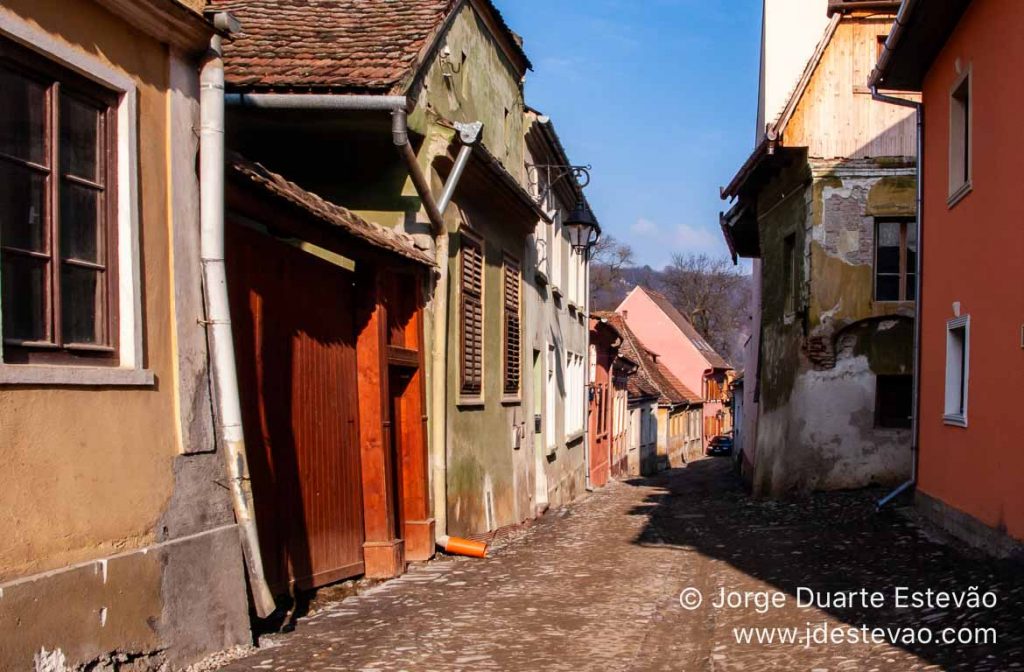
Much of what there is to visit in Sighisoara is within walking distance. However, I recommend that you take a chance and wander through the streets, alleys and backstreets to find the real magic of the city. It's best to lose yourself in the city's streets, walking aimlessly, with no purpose or obligation to visit anything.
Find the Stag House, a pink building with a deer antler, and the Venetian House of Sighisoara, so called because of the stones that define the windows - imitating Venetian style.
Saschiz
Once you've exhausted everything there is to see in Sighisoara, if you have the time, take a trip to an equally attractive town: Saschiz. It's only a 20-minute drive to see another UNESCO-listed town with an impressive Saxon church from the late 15th century.
Due to the significant distance between the centre and the hill on which the Saxon fortress was built, the fortified church became the main refuge for the inhabitants of Saschiz during the invasions.
Map of places to visit in Sighisoara
Extra information
How many days in Sighisoara
Most travellers visit Sighisoara on a day trip. Situated halfway between the Romanian cities of Brasov and Sibiu and due to its compact size, it's possible to see everything in one day.
However, I recommend an overnight stay. In the evening, when most visitors have left, you'll have the Citadel to yourself. The atmosphere is captivating and there's a sense of travelling back in time.
Save time (and money)
If you want to immerse yourself even more in the local culture, optimise your trip and even save money, take part in experiences and guided tours in Sighisoara. Book the best tours and activities in advance. Skip the queues and get your entrances to monumentsYou'll have more time to enjoy your trip.
When to visit Sighisoara
Sighisoara is a city where it is cold for many months of the year, due to its proximity to the Carpathian Mountains. The best time to visit Sighisoara is in early spring and into autumn. However, it's always advisable to pack a light jacket.
That said, I visited Transylvania in winter. So it's possible to travel to this part of Romania at any time of year, as long as you're prepared. Summer is perfect, however, for sitting out on the city's terraces.
Internet and Wi-Fi
The most affordable way to access the internet is to buy this eSIM (with a 15% discount). Discover the world without worrying about roaming and access high-speed internet in over 190 countries.
Money in Sighisoara
The official currency in Romania is the Romanian Leu (RON). Card payments are common, and cash machines are often found in Sighisoara, so there's no need to travel with cash.
I use the Wise card and the Revolut card to avoid bank fees and commissions. I always travel with both.
How to get to Sighisoara
I arrived in Sighisoara by train from Cluj Napoca, then went on to Sibiu and Timisoara and Bosnia-Herzegovina. In addition to these, there are train connections to other parts of Romania, such as the capital Bucharest or Brasov.
From Cluj to Sighisoara there are tickets from €5. There are various connections between Bucharest (Bucuresti Nord) and Sighisoara, which takes between five and six hours. Tickets start at €10.
I therefore recommend that you fly to Cluj Napoca or Bucharest and then take the train to Sighisoara. You can use this site to search for flight times and prices.
Once you arrive at Sighisoara railway station, you can walk to the citadel or take a taxi to the main square.
Hotel in Sighisoara
When I was in Sighisoara, I stayed at Casa Legenda. It's a very pleasant place, in the centre of the medieval citadel and just a few minutes' walk from Cetatii Square.
In the city of Sighisoara, there are numerous hotels and guest houses where you can stay overnight. Here are some other recommendations:
- Casa Savri (9,5)
- Carolina House (9,6)
- Hotel Bulevard Sighisoara (9,5)
- Hotel Korona (9.3)
- Casa Lily (9.3)
- Hotel Central Park Sighisoara (9.0)
Travel Insurance
Never travel without travel insurance. I recommend IATI Seguros or Heymondo (if you use either of these links you get a 5% discount). They are the best travel insurance (and the cheapest) and have Covid-19 protection.
Whenever you want to book a flight, a hotel or buy travel insurance, use the platforms I recommend and trust. All you have to do is click on the links below before researching your trips.
You don't pay extra for using these links.
- Hotel in Sighisoara at the best price
- Travel Insurance at IATI or Heymondo (5% discount with this link)
- Cheap flights for your next trip
- Rental car with reduced rates
- Bank card without commissions for travelling
- Store your luggage safely and cheaply
- Photography workshops — learn photography with me
Note: This text may contain affiliate links, but you don't pay more for using any link (and you can even save money). Guaranteed!
I organise and lead group trips to destinations I know well. And I only travel with small groups (maximum 12 people).
I've been to 60 countries, so if you have a trip in mind with a group of friends, family or work colleagues, contact me and I'll be happy to plan, organise and lead the trip you want. The itinerary can be customised, as can the budget and activities.
See the travel calendar and sign up or tell me where you want to travel as a group and I'll take care of everything.