This week I attended the press-only pre-opening of the Temperate House. The huge glasshouse in London reopens to the public this Saturday after five years of restoration work.
In total, 41 million pounds (56 million euros) were spent to revitalize this important greenhouse in the most fantastic gardens of England, located in southwest London. The total cost was financed by the National Lottery fund, the British government, and private donors.
In 2010, a British government report on the state of the botanic gardens concluded that renovation was urgent or they would have to close indefinitely. E
In 2013, the enormous glass and iron doors of this majestic botanical structure were closed for the most complex restoration project in the history of Kew Gardens. Inaugurated in 1863, the Temperate House will be reopened to the public this Saturday, May 5th.
Ten thousand plants were replaced with newer specimens, while others were carefully returned after spending the last few years in a temporary greenhouse. 180 kilometres of scaffolding were needed to complete the project, which included removing 13 layers of paint from the structure's steel.
Enough space for three Boeing 747s
The Temperate House is so large that it could house three Boeing 747s inside. Over the last five years - after an extensive and complex renovation project - 69,000 elements have been removed, 15,000 glass panels have been installed and 5,000 litres of paint have coloured the steel structure.
Kew Gardens officials estimate that no maintenance will now be required for the next 25 years.
Temperate House is a building protected by British law (Grade I listed - buildings of exceptional importance), the changes were limited from the outset.
The project's chief architect, Aimée Felton, from the architectural team Donald Insall Associates, explained to me that much of the complexity of the project was related to the choice of materials. However, the whole process required the removal of all the elements, including the soil, leaving only the steel "skeleton" of the greenhouse.
As this is a place with a high level of humidity - and open to the public on a daily basis - it will be subject to enormous and continuous wear and tear. For this reason, the choice of flooring, for example, allows for long durability and easy cleaning.
According to Aimée Felton, the paints used are the same as those used to build ships, i.e. they are resistant to corrosion for a long time. When choosing the simple but thick glass panels, attention had to be paid to the UV effect so as not to alter the colours inside the Temperate House.
Temperate House image gallery
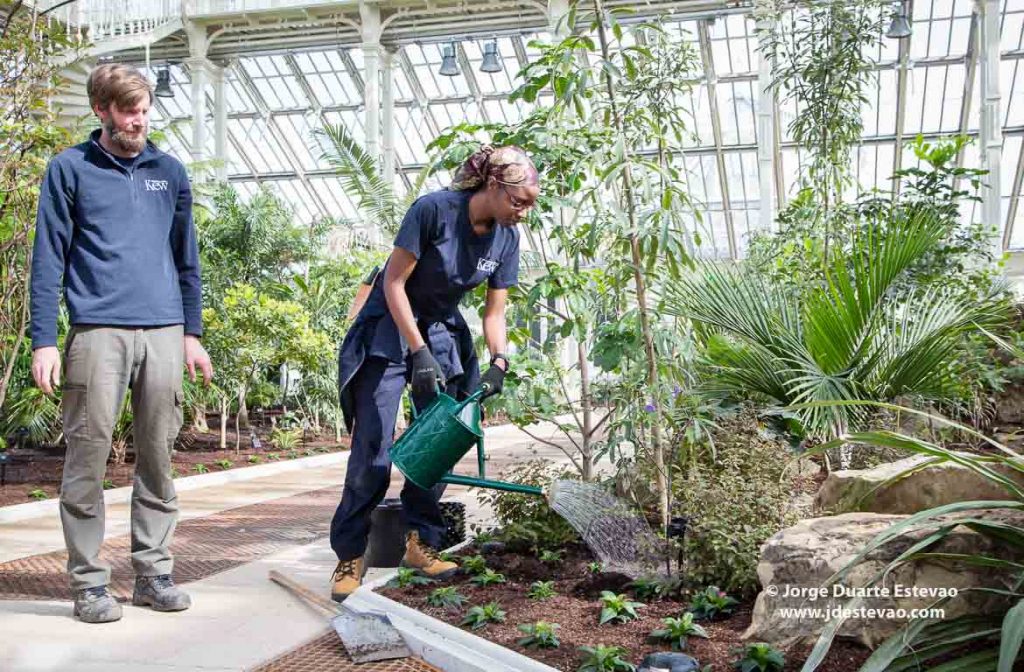
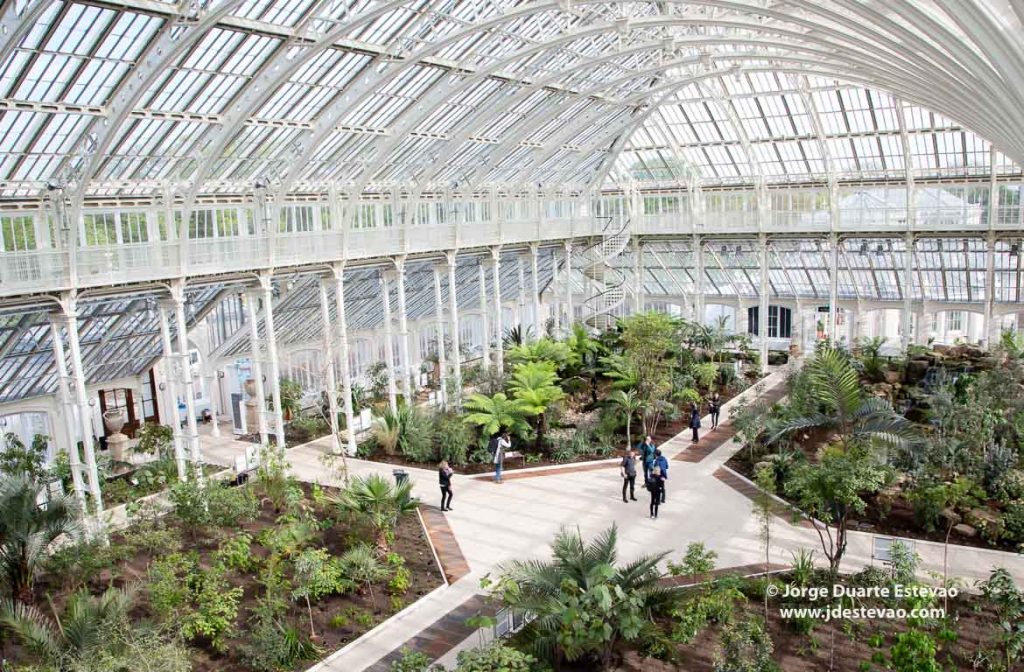
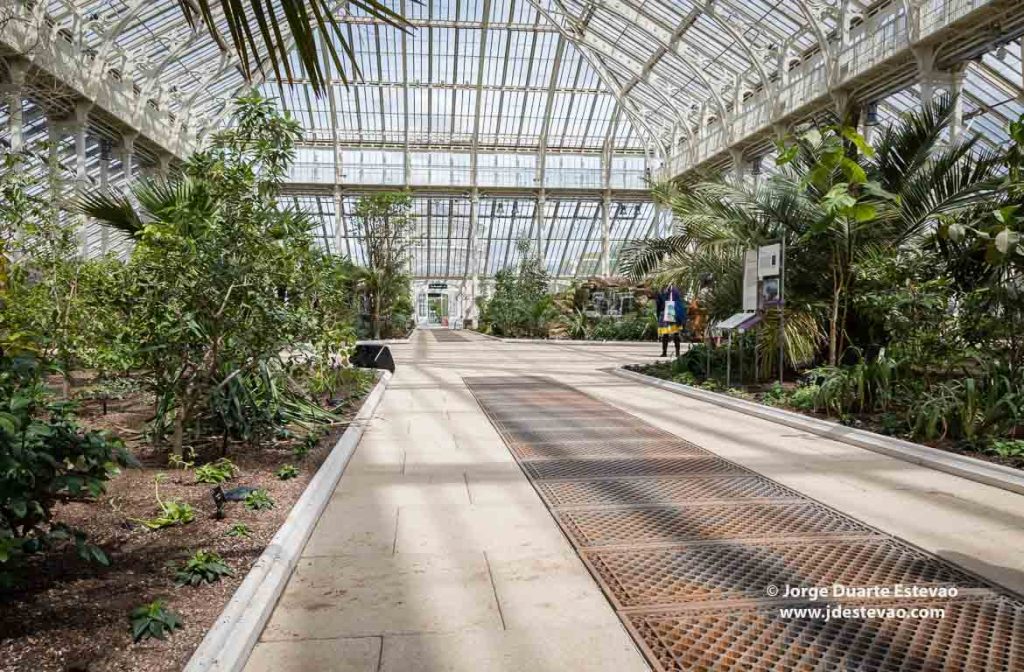

Space of choice for David Attenborough
The building is home to several unique species that have become extinct in their natural habitat, including cycad Encephalartos woodiiIt has survived for millions of years and even escaped the dinosaurs due to its sharp peaks.
David Attenborough, the famous presenter and naturalist, who turns 92 on 8 May, is one of the many local residents who are rejoicing at the reopening of the great glasshouse. Speaking to the British press, Attenborough said: "When I had an office job and was depressed, I used to go to Kew Gardens at weekends to take a breather.
It's fantastic." Attenborough described Kew Gardens as the most important botanical institute in the world, pointing out that many world experts visit the gardens to check that a particular plant has not yet been catalogued.
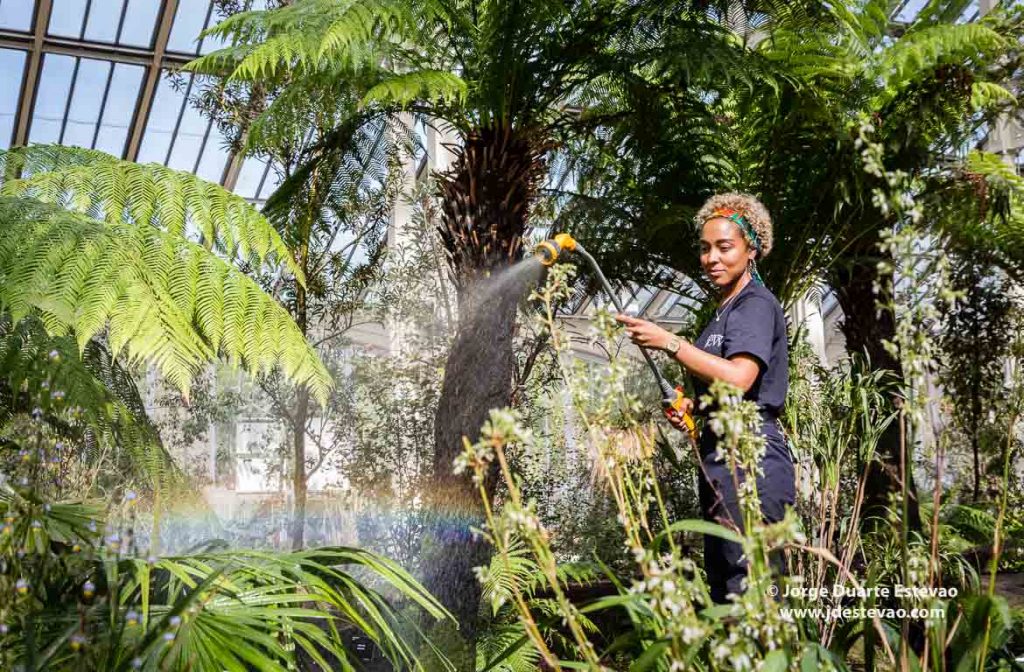
Chief horticulturist Scott Taylor, who oversees the Temperate House, explained to me that the layout of the plants followed specific rules, according to the incidence of the sun.
For example, some plants were placed on the north side of the building to protect them from sunlight and the reverse happened on the south side. "By restoring this historic building, we are guaranteeing its conservation and highlighting our botanical heritage," he emphasised.
Plants at Temperate House
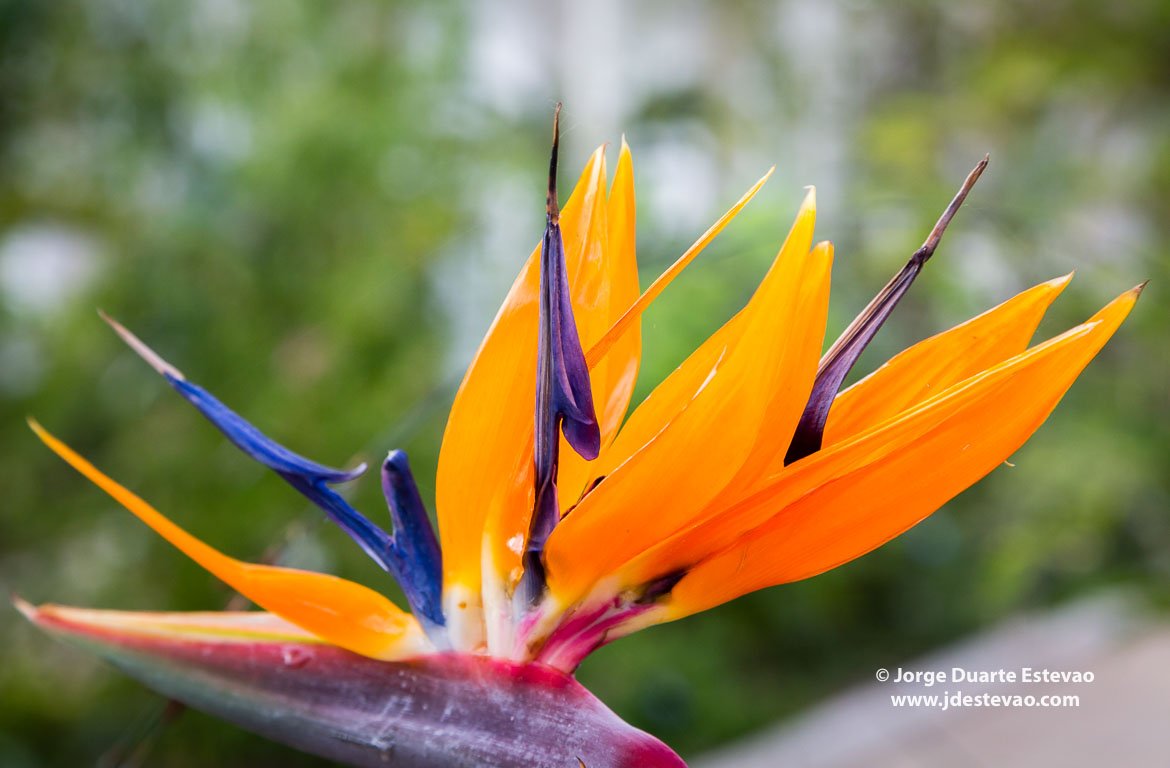
There are 1,500 plant species on display, such as the Leucospermum conocarpodendron subsp. conocarpodendron which was grown from seeds over 200 years old. The seeds were kept in a leather wallet between 1803 and 2005 and were discovered by chance by a researcher examining documents in the British Archives.
Inside Temperate House, about half an hour from the centre of London, the species Handroanthus Impetiginosus - which can be found in the south of Mexico and in the north of Argentina - is the largest plant on display, reaching up to 8 metres.
Temperate House plants in numbers
- 3 plant species in the Temperate House are extinct in their natural habitat
- 5 continents or sub-continents - this is where species originate (South and North America, Asia, Africa, Australia and Africa)
- 70 plant species are rare or endangered
- 150 plants of species were planted from the Millennium Seed Bank Project - a Kew Gardens conservation project to protect species from extinction
- 500 plants were removed at the start of the restoration
- 1300 cubic metres of compost were used
- 1500 different species on display
- 10000 plants have been replanted at the Temperate House
Key facts about the renovation of Temperate House in Kew Gardens
- 56 million euros was the total cost of the renovation
- 1731 days were needed to complete the Temperate House project
- 400 employees and contractors worked on the project
- 69,000 individual elements were removed from the building and cleaned, repaired or replaced
- 15,000 glass panels replaced
- 19 metres is the highest point of the structure
- 180 km of scaffolding - the equivalent of the length of the M25 motorway around London
- 5280 litres of paint used - enough to cover four football pitches
- 3 Boeing 747s - the size of the greenhouse structure would be enough to hold three passenger aeroplanes
Whenever you want to book a flight, a hotel or buy travel insurance, use the platforms I recommend and trust. All you have to do is click on the links below before researching your trips.
You don't pay extra for using these links.
- Hotel in London at the best price
- Travel Insurance at IATI or Heymondo (5% discount with this link)
- Cheap flights for your next trip
- Rental car with reduced rates
- Bank card without commissions for travelling
- Store your luggage safely and cheaply
- Photography workshops — learn photography with me
Note: This text may contain affiliate links, but you don't pay more for using any link (and you can even save money). Guaranteed!
I organise and lead group trips to destinations I know well. And I only travel with small groups (maximum 12 people).
I've been to 60 countries, so if you have a trip in mind with a group of friends, family or work colleagues, contact me and I'll be happy to plan, organise and lead the trip you want. The itinerary can be customised, as can the budget and activities.
See the travel calendar and sign up or tell me where you want to travel as a group and I'll take care of everything.